Air-Gapped Is Not the Same as Accountable
A network moat tells you what a system could not reach. It tells you nothing about what the system actually decided. Containment without a signed record is a story you hope is true.
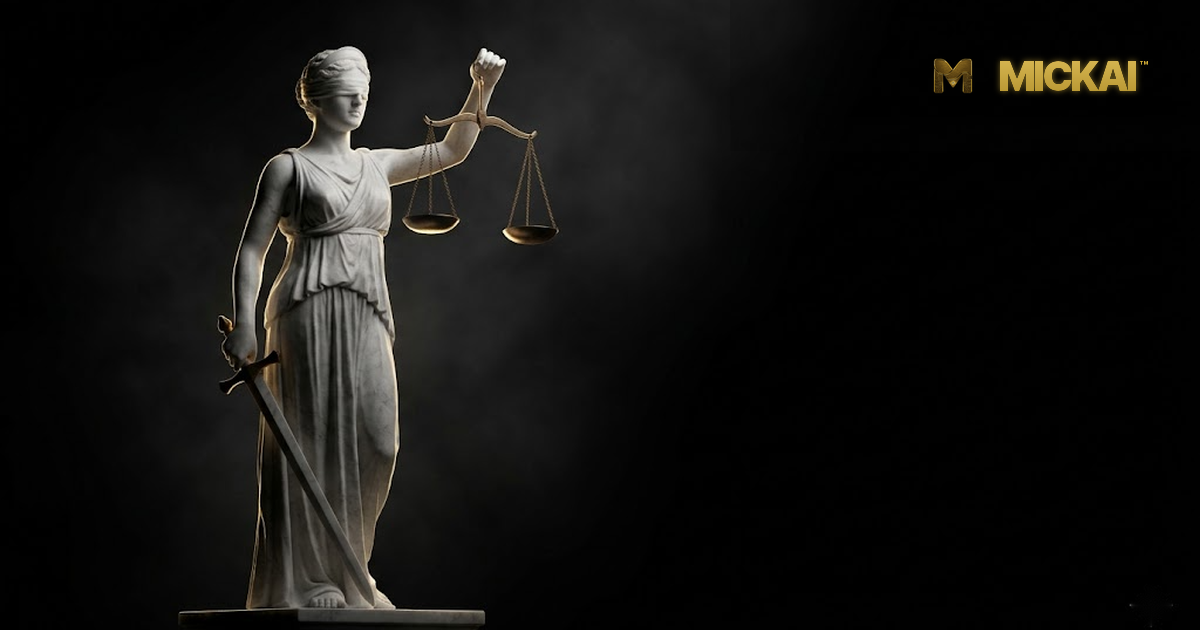
The moat is not the evidence
Air-gapping is the security control everyone reaches for when the stakes get high. Pull the cable. Put the model behind a data diode. Stand it up in a room with no route to the internet, and breathe easier. I understand the instinct, and I have used it. But somewhere along the way we started treating the air gap as if it were proof of good behaviour, and it is nothing of the kind.
An air gap answers exactly one question: what could this system reach. It draws a boundary around blast radius. That is genuinely useful, and I am not here to talk anyone out of isolation. The problem is that we have quietly let containment stand in for accountability, and those are two different jobs. Isolation tells you where a decision could not travel. It says nothing about what the decision was, what evidence the model leaned on, or whether the thing that ran is the thing you approved. The moat describes the perimeter. It is not the record of what happened inside it.
What isolation conveniently hides
Here is the uncomfortable part. The more isolated a system is, the easier it becomes to make unverifiable claims about it. If a model sits in a sealed room and no one outside can observe it, then the only account of what it did is the operator's word, plus whatever logs the operator chose to keep, in whatever format the operator chose, with whatever gaps the operator never noticed. Isolation does not just fail to produce evidence. It removes the witnesses who might have demanded any.
Logs feel like evidence, so let me be blunt about them. A log file written by the same system you are trying to hold to account is not an independent record. It can be edited. It can be truncated. It can be written after the fact by a process that decides, in the moment, what the tidy version of events should look like. When something goes wrong, the first thing a determined party reaches for is the log, and the second thing they reach for is a reason it is incomplete. A record that the actor can quietly rewrite is not an audit trail. It is a draft.
There is a subtler failure too. Air-gapping protects against an outside attacker crossing the wire. It does almost nothing against the model doing the wrong thing competently, on purpose or by accident, entirely inside the boundary. A misaligned action, a prompt that smuggled in an instruction, a tool call that should never have fired, all of these happen on the safe side of the moat. The gap stops exfiltration. It does not stop a bad decision, and it certainly does not document one.
Containment and accountability are different problems
It helps to name the two jobs plainly. Containment limits what a system can affect. Accountability proves what a system did. You can have either without the other, and most deployments I see have the first and pretend it covers the second. A sealed room with no record is contained and unaccountable. A fully logged system on an open network is accountable in principle and uncontained in practice. The deployments that actually deserve trust do both, and treat the record as a first-class requirement rather than a courtesy.
This matters more every quarter, not less. The regulatory direction across the European Union (EU) and beyond is converging on a simple demand: if your system makes consequential decisions, you must be able to show how, and you must be able to show it to someone who does not work for you. The high-risk obligations arriving under the European Union Artificial Intelligence Act (EU AI Act), with the next major tranche landing in August 2026, are built around traceability, record-keeping, and human oversight that an external party can actually inspect. At the same time, liability for automated decisions is shifting toward the people who deploy them. In that climate, an air gap is a fine answer to the wrong question. The auditor is not asking whether your model could phone home. The auditor is asking what it decided, and proving you cannot reconstruct that answer is not the defence you want to be running.
What a real record has to survive
So what would an honest record look like? I think it has to clear four bars, and most of what passes for artificial intelligence (AI) logging today clears none of them. None of the four is exotic. They are the properties any forensic discipline outside our industry would have insisted on decades ago, and the fact that AI logging routinely ignores all four should tell you how immature the field still is.
- Written before the act, not after. The record of an action must be committed before the action runs, so the account cannot be edited to flatter the outcome. If you can decide what the log says after you see what happened, the log is fiction with good production values.
- Tamper-evident as a chain, not a pile. Each entry should be cryptographically bound to the one before it, so removing or altering a single line breaks every line that follows. A pile of timestamped files can be pruned silently. A hash chain cannot be edited in the middle without the break showing.
- Verifiable without trusting the vendor. The person checking the record should be able to confirm it with mathematics, offline, on their own machine, with no call to my servers and no faith in my honesty. Trust that depends on the trusted party is not trust. It is hope with a logo.
- Durable against tomorrow's cryptography. Signatures protecting decisions made today have to hold up against the computers of the next decade. That means post-quantum signatures now, not a migration project filed under later.
Notice that an air gap delivers none of this, and a signed record does not require one. The two are orthogonal. You can isolate a system and still have no idea what it did, or you can connect it to the world and still be able to prove every move it made. The record is the part that does the accountability work. Isolation is just hygiene around it.
The record is the containment
This is the thesis I keep coming back to, and it is the principle Mickai is built on. Real containment is not the moat. Real containment is the signed account of what crossed it. A boundary you cannot inspect is not contained, it is merely hidden, and hidden is the most expensive word in security once something goes wrong.
Mickai is a Sovereign Intelligence Operating System (SIOS), built and in production, and the part of it that does this job is the Open Audit Record (OAR). Every action one of the system's fifty brains takes is signed before it executes, then hash-chained into an append-only ledger. The signatures are post-quantum, using the United States National Institute of Standards and Technology (NIST) standard FIPS 204 (ML-DSA-65), so a decision recorded today is still provable against the machines of the 2030s. And the whole record verifies offline, in an ordinary browser, with no trust placed in me or in Mickai as a company. If I vanished tomorrow, the record would still stand on its own mathematics. For the deployments that need the strongest possible anchor, that audit root is chained upward to Pantheon, a sovereign Layer 1 settlement chain that anchors the history to Bitcoin, so the record cannot be quietly rewritten even by us.
None of this is theoretical scaffolding I am promising for later. The OAR is live, the fifty brains run on our own Poseidon silicon substrate, and we are actively training our own specialised models now, hardening them on a sealed corpus we build ourselves toward fully native weights. The architecture behind it is filed, not hand-waved: 104 United Kingdom patent applications, 2,340 claims, owned by Mickai LTD, with me as the named inventor. I mention that not to wave credentials around, but because an accountability claim you cannot point to anything concrete behind is exactly the kind of unverifiable assertion this whole essay is arguing against.
I want to be precise about what that buys you, because I dislike overclaiming as much as I dislike air-gap theatre. A signed record does not make a model correct. It does not stop a bad decision from being made. What it does is make every decision legible after the fact to someone who does not have to take your word for anything. It turns the question from do you trust the operator into can you check the record, and that is the only version of trust that holds up in a courtroom, an audit, or a crisis.
So by all means, keep your air gaps. Pull the cable where the cable should be pulled. But stop letting isolation launder away the harder obligation. The day someone asks what your system actually did, a sealed room will give you silence, and silence is not an answer anyone in oversight accepts any more. A signed, chained, offline-verifiable record gives you the one thing a moat never can. It gives you proof. Build the moat if you must. Then build the record, because the record is the only part that can ever speak for you.