Iris: Sovereign Customer Service AI Where Every Reply Is on the Record
Iris runs regulated customer conversations inside your own walls and writes every reply to a tamper-evident, post-quantum-signed audit record, closing the compliance gap that public chatbots cannot.
The problem with answering a regulated customer
In a regulated business, a customer service reply is not just a reply. It is a record. When a bank confirms a balance, an insurer explains a claim decision, or a clinic discusses a result, that exchange can be examined later by a regulator, an auditor, an ombudsman, or a court. The firm has to prove what was said, who said it, on what basis, and that the record has not been altered since.
Public chatbots cannot meet that bar. The moment a customer message leaves your building for a public-cloud model, you have shipped potentially special-category personal data to infrastructure you do not control, in a way you often cannot fully evidence. For firms under UK GDPR, NHS DSP Toolkit obligations, the EU AI Act high-risk regime, or PRA expectations on operational resilience, that is not a small risk. It is a reason not to deploy at all. So many regulated firms have watched the customer service AI wave pass them by, caught between a capability they want and a compliance posture they will not abandon.
Iris is built to close exactly that gap.
What Iris is
Iris is the customer service Studio inside Mickai, the sovereign AI operating system. Mickai is AI that regulated businesses own and run inside their own walls, on-premise and air-gapped where required, with every action written to a tamper-evident, post-quantum-signed audit record we call the OAR. Iris is built and live, not a concept or a roadmap item. It is one of the Greek-named Studio modules running on the same sovereign substrate as Nemesis for fraud and AML, Plutus for finance, Tyche for underwriting, Nomos for compliance, Astraea for legal, and Panacea for clinical work.
In Greek myth Iris is the messenger who carries word between gods and mortals without distorting it. That is the brief. Iris handles the front-line conversation, the question, the complaint, the claim query, the account request, and does it inside your perimeter so that nothing sensitive ever has to leave.
Every reply is on the record
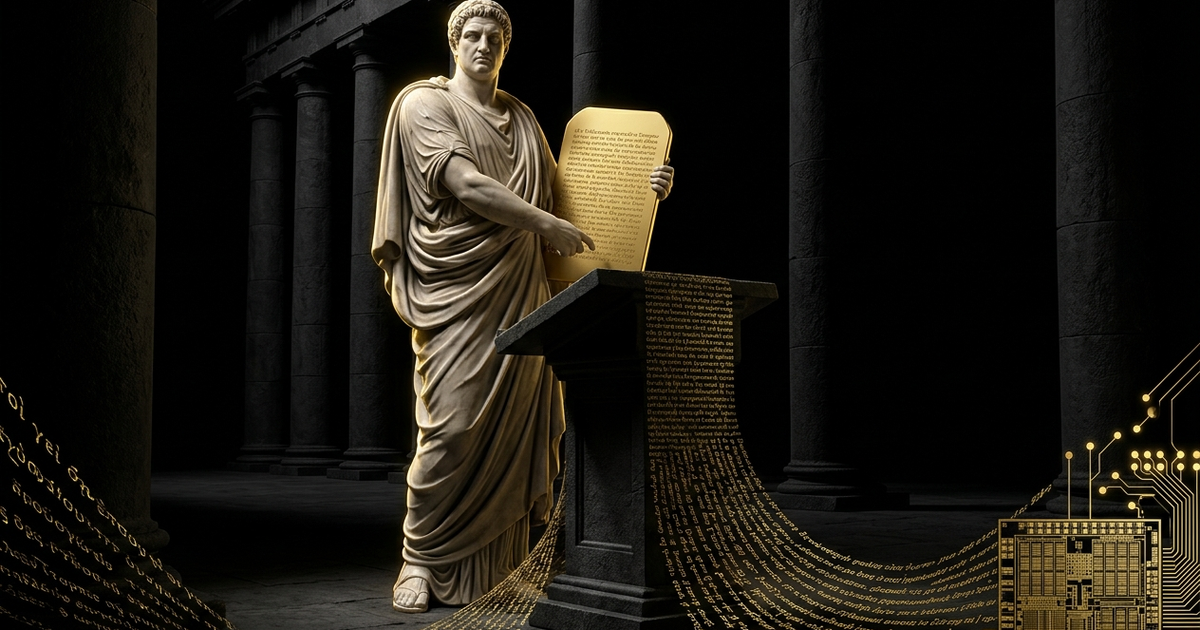
The part that matters for a regulated firm is what happens after the reply is sent. Every Iris interaction is written to the OAR, the Mickai audit record. Each entry is hashed, chained to the entry before it, and signed using post-quantum cryptography, so the chain stays verifiable even against future quantum attacks. You can show an examiner the exact text, the model state, the retrieved sources, and the timestamp, and you can demonstrate that the entry has not been edited since it was written.
This changes the compliance conversation. Instead of asking a regulator to trust that an AI behaved, you hand over evidence. The record is the control. When a customer disputes what they were told, when an ombudsman asks for the file, when an auditor samples interactions, the answer is already captured in a form designed to survive scrutiny. That is the difference between a chatbot you hope behaved and a system that can evidence how it behaved.
Why on-premise is the whole point
Sovereignty is not a feature bolted onto Iris. It is the reason Iris exists. The wedge Mickai serves is the set of regulated firms that legally cannot send data to public-cloud AI. In the UK that is roughly 0.85 million businesses, about 15 percent of the market. Across the EU it is closer to 5 million. The drivers are concrete: PRA SS2/21 on model risk, UK GDPR special-category data, the NHS DSP Toolkit, the EU AI Act high-risk classification, ITAR and EAR export controls, the NIS Regulations, and the US CLOUD Act, which is precisely why a US-hosted model is a non-starter for a European firm holding sensitive data.
The market reflects this. Sovereign AI was valued at around 40 billion US dollars in 2025 and is projected to reach roughly 148 billion by 2032. These are not firms that lack budget for AI. They are firms that lack an AI they are allowed to use. Iris is built for them, owned and run inside their own walls, with the audit trail to match.
An ally, not a replacement for your stack
Iris is not pitched as an OpenAI killer, and Mickai is not trying to win the public-model race. The thesis is dual-buyer. Some organisations will run their general AI in the public cloud and route only their regulated, sensitive, on-the-record interactions through a sovereign system like Iris. Others will run sovereign across the board. Either way, Mickai sits as the layer that makes the regulated portion defensible. We are an ally to the firms that already use public models, not a demand that they tear everything out.
That positioning sits on top of real intellectual property. Mickai holds 104 filed UK patent applications, 2,340 claims, owned by Mickai LTD with myself as inventor. These are filed rather than granted, which establishes priority and builds a prior-art moat around the sovereign-AI methods the Studios depend on, including the audit-record architecture behind Iris.
Built, and building to scale
The momentum is showing up in third-party signals. As of June 2026, I am ranked number four on Crunchbase by CB Rank for people, verified live, with the Mickai company profile sitting in the top one to two percent globally. I treat that as a dated snapshot of external attention rather than a permanent claim, but it tells me the sovereign-AI thesis is landing. The company is UK-based, with Birmingham manufacturing secured, and we are building to scale from a system that already runs.
For regulated firms, the practical takeaway is simple. You no longer have to choose between deploying customer service AI and staying compliant. Iris lets you do both, on your own hardware, with every reply on the record.
Working with us early
As we scale, we are speaking with a selected group of partners. This is an opportunity to be early in a sovereign AI operating system that is already built and live. If you are a regulated firm that wants to see Iris running against your own compliance requirements, or a partner who wants to be part of this stage, I would like to talk.
Micky Irons, founder and CEO of Mickai. Reach me at micky@mickai.co.uk.
Frequently asked questions
What is Iris?
Iris is the customer service Studio inside Mickai, the sovereign AI operating system. It handles regulated customer interactions, questions, complaints, claim queries and account requests, entirely inside a firm's own perimeter, on-premise or air-gapped, so sensitive data never leaves the building.
How does Iris solve the compliance gap that public chatbots leave open?
Public chatbots send customer data to public-cloud models, which is often unlawful for regulated firms and hard to evidence. Iris runs inside your own walls and writes every interaction to the OAR, a tamper-evident, post-quantum-signed audit record. You can show exactly what was said and that the record has not been altered, which turns the audit trail itself into the compliance control.
Which firms is Iris built for?
Iris targets regulated firms that legally cannot send data to public-cloud AI, roughly 0.85 million UK businesses and around 5 million across the EU. The drivers include UK GDPR special-category data, PRA SS2/21, the NHS DSP Toolkit, the EU AI Act high-risk regime, ITAR and EAR, the NIS Regulations, and the US CLOUD Act.
Is Mickai trying to replace OpenAI or my existing AI stack?
No. Mickai is an ally, not an OpenAI killer. The thesis is dual-buyer: run general AI in the public cloud and route only the regulated, on-the-record interactions through a sovereign system like Iris, or run sovereign across the board. Mickai is the layer that makes the regulated portion defensible.
How mature is Iris, and what is the patent position?
Iris is built and live, running on the same sovereign substrate as the other Mickai Studios. It sits behind 104 filed UK patent applications, 2,340 claims, owned by Mickai LTD with Micky Irons as inventor. These are filed rather than granted, establishing priority and a prior-art moat. As a dated third-party signal, Micky Irons ranked number four on Crunchbase by CB Rank for people as of June 2026, with the Mickai company profile in the top one to two percent globally.