HELIOS Eos
Solar power bank, the charge that keeps the HELIOS family fed off-grid
The Mickai HELIOS Eos is the portable solar power bank of the energy-sovereign family, the unit that gathers light and keeps the rest of the family fed off-grid. A folding monocrystalline array charges an onboard lithium iron phosphate battery through an MPPT controller, and pure-sine AC, USB-C PD and 12 V DC outputs run the HELIOS Phaethon laptop, the operator's field kit, phones, radios, lights, and small tools. It is primarily an energy device, not a compute node, but it carries a sealed low-power controller that runs the same energy-aware scheduling method as the HELIOS Aegis to manage charge, draw, and output priority, and it signs its energy ledger, how much was harvested, stored, and delivered, to the Open Audit Record, so the operator can prove the unit's energy history. Eos is for the field camp that needs power and the SIOS laptop kept charged, the disaster-response kit, the expedition, and the off-grid holding that wants a power bank built to the same sovereign, sealed standard as the rest of the lineup. The energy-aware scheduling method is the subject of UK patent application GB2612790.2, filed June 2026; the application is filed, and the Eos does not carry a separate application of its own. The operator owns the hardware, the keys, and the audit record. No subscription for context or usage. The price you pay on day one is the price you pay for life.
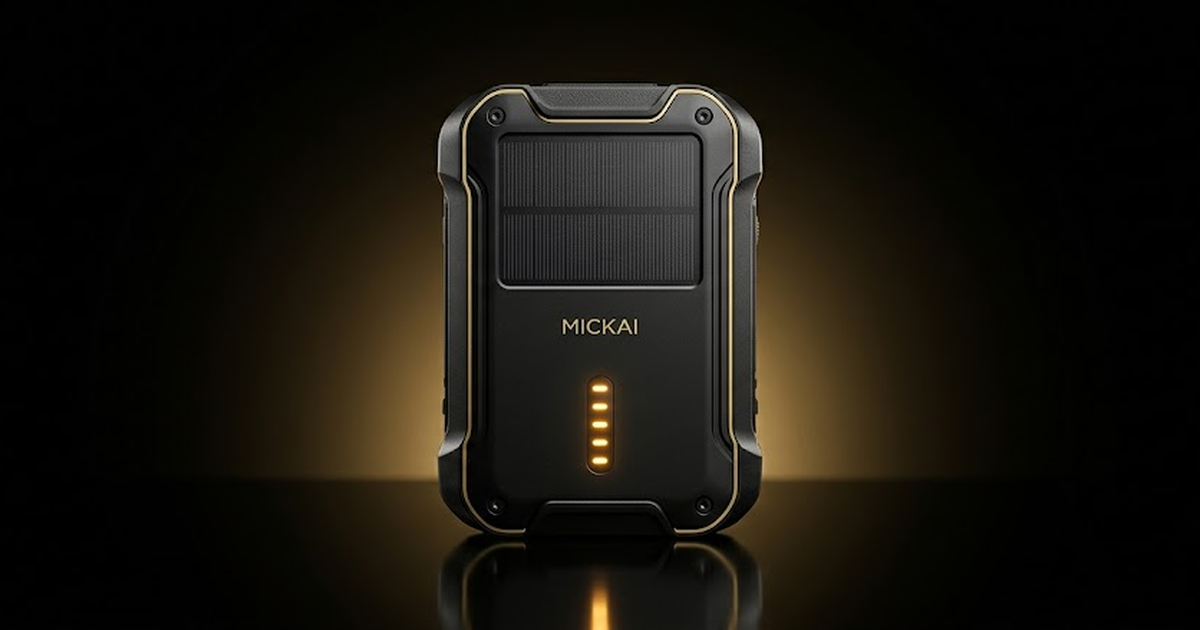
Eos is the Greek goddess of the dawn, the rosy light that arrives first each morning and wakes the world before the sun itself. The solar power bank carries her name because it is the first charge of the day, the dawn light gathered and stored to keep the rest of the HELIOS family running.
- Battery
- 2 kWh (2,048 Wh) lithium iron phosphate, around 3,500 cycles to 80 percent
- Solar input
- Up to 400 W via folding monocrystalline array, MPPT charge controller, 11 to 60 V input
- AC output
- 1,500 W continuous pure sine (3,000 W surge), 230 V, single socket
- USB-C output
- 2x USB-C PD 100 W, sized to charge the HELIOS Phaethon and field laptops
- DC and USB-A output
- 2x 12 V DC, 2x USB-A, for radios, lights, and small field kit
- Controller
- Sealed low-power energy controller, runs the HELIOS Aegis energy-aware method for charge, draw and output priority
- Audit
- Signs its energy ledger (harvested, stored, delivered) to the Open Audit Record under FIPS 204 ML-DSA-65
- Recharge from mains
- Around 2 hours wall to full, optional, mains is not required
- Recharge from solar
- Around 6 to 8 hours from the 400 W array in good sun
- Display
- Low-power status panel, charge, draw, harvested-today, output priority
- Weight
- Around 16 kg the bank, around 5 kg the folding array
- Environment
- IP54, minus 10 to plus 45 C operating, passive plus throttled-fan thermals
An energy device, not an inference device. The sealed controller schedules charge, draw and output priority and signs the energy ledger to the Open Audit Record.
Beyond the standard Windows and Linux workflow, here is what HELIOS Eos does with the Mickai SIOS running on the box. Concrete capability per category, with the level the hardware can carry.
A folding array charges a 2 kWh lithium iron phosphate battery through MPPT, and pure-sine AC, USB-C PD and DC outputs deliver it. Sized to keep the HELIOS Phaethon laptop and the operator's field kit running off-grid. The dawn charge for the rest of the family.
IP54 sealed, wide temperature range, no mains and no network required. The power supply for a research camp, a disaster-response kit, or an off-grid holding, in one sealed, carryable unit.
Not a compute node. A sealed low-power controller runs the HELIOS Aegis energy-aware method to manage charge, draw, and output priority, and signs the energy ledger to the audit record. Honest about being a power device first.
The energy ledger, how much was harvested, stored, and delivered, is signed to the OAR, so the unit's energy history can be proven. No egress beyond that, no subscription, operator-owned hardware and keys.
- Folding solar array to a 2 kWh battery, pure-sine AC, USB-C PD and DC outputs, off-grid
- Sized and tuned to keep the HELIOS Phaethon laptop and the operator's field kit charged
- Sealed energy controller runs the same energy-aware method as the HELIOS Aegis (GB2612790.2, filed)
- Signs its energy ledger to the Open Audit Record, the unit's energy history is provable
- Mains-optional and generator-optional, recharges from sun or wall
- No subscription for context or usage, the operator owns the hardware and the keys
- MICKAI® wordmark etched on the front face
Mickai LTD owns the substrate and the filed portfolio; the named inventor on every application is Micky Irons. One hundred and four UK patent applications have been filed against the substrate, with 2,340 claims across them, on the public UK IPO register under GB2607309.8 onwards. The corpus covers the cooperative architecture, the Open Audit Record, the FIPS 204 ML-DSA-65 signing primitive, the clearance-gated retrieval, the audio dual-layer watermark, the silicon root of trust, and the host-acceptance attestation that lets the Mickai bundle migrate from one machine to another without breaking its signed chain.
Poseidon, the Mickai Sovereign AI SoC. In-house silicon that complements the GPU fabric on every SKU. Carries the OAR signing primitive in silicon, holds the hardware identity and cryptographic root of trust, and sits between the network interface and the GPU fabric so every action that crosses the bus can be policy-checked before commit. Optional on every SKU as the silicon lands.
Pricing TBD. The price on day one is the price for life. No subscription for context or usage. Only paid upgrades through the sandboxed channel, optional.
Launch window: Late 2026
One machine, the whole sovereign stack, owned outright.
Every SKU inherits the same patented substrate and sealed audit trail. When you want the unit economics and a working demonstration, request a briefing or read the investor case.