


Privilege That Never Leaves the Firm
Why the firms with the most to protect were the last allowed to use artificial intelligence, and what changes when the files never leave the building.
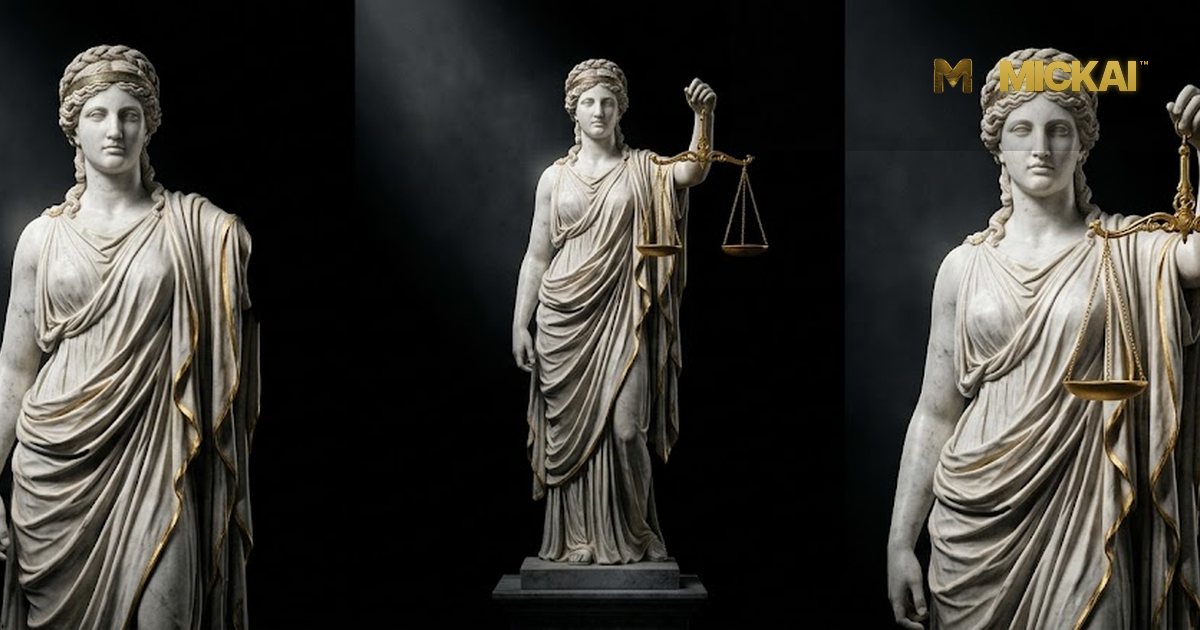
The Profession That Could Not Board
Legal professional privilege is the oldest confidentiality the common law recognises. It is not a courtesy and it is not a setting. It is a substantive right belonging to the client, protecting communications between a lawyer and that client from compelled disclosure, and the courts guard it jealously because the whole system of taking advice depends on it. A litigator preparing a defence, a partner drafting a position on a contested acquisition, an associate reviewing the privileged correspondence behind a regulatory investigation: all of them work on material that, by definition, must not be seen by anyone outside the privileged relationship.
Then artificial intelligence arrived, and the profession with the most to gain from reading documents at scale found itself the profession least able to use it. The reason was structural, not cultural. A cloud large language model is a request sent to a third party. The privileged document leaves the firm, travels to infrastructure the firm does not own, is processed on shared hardware the firm cannot inspect, and returns. For ordinary work this is unremarkable. For privileged material it is potentially catastrophic, because the moment a privileged document is voluntarily transmitted to a third party, the firm has handed an opponent the argument that privilege was waived.
“If you are a multibillion-dollar company running on Anthropic or OpenAI, and your direct competitor of comparable scale sits on the same vendor stack, what stops them paying a vendor insider to leak your data, your tactics, your leads, your sales strategy? Inside a third-party cloud, there is no safeguard you can verify from the outside. The only answer is a sovereign system where you hold the keys, with no third-party cloud data path.”
The Magic Circle firms, the elite London litigation and transactional practices whose names sit on the most sensitive matters in the country, watched the artificial intelligence wave build and could not board it. Their disclosure exercises run to millions of documents. Their contract reviews shape billion-pound deals. Their advice is the textbook definition of privileged. The very sensitivity that made them want the technology was the reason they could not touch the version of it everyone else was using.
What The SRA Actually Requires
The Solicitors Regulation Authority (SRA) does not regulate technology directly, and that is precisely why its obligations bite so hard on cloud artificial intelligence. The SRA Standards and Regulations require a solicitor to keep the affairs of clients confidential unless disclosure is required or permitted by law or the client consents. That duty does not soften because a tool is convenient. It requires the firm to be able to say, with confidence, where every piece of client information has gone and who could have touched it.
A cloud large language model breaks that confidence at the root. The firm cannot tell the client where the document was processed, cannot inspect the hardware, cannot rule out a vendor administrator with standing access, and cannot produce a record the client could verify. The SRA also requires competent supervision of work and sound risk management across the practice. A general counsel asked to approve a tool that exports privileged material to a third party, with no firm-held proof of what happened to it, is being asked to approve a risk they cannot bound. Most have declined, and they were right to.
Layer the United Kingdom General Data Protection Regulation (UK GDPR) on top. Client files hold special-category and litigation-relevant personal data. The firm is the controller and remains accountable for every onward transfer. Add the duty of confidence owed in equity, the contractual confidentiality in the retainer, and the professional conduct rules, and the picture is consistent. The profession was not being precious. It was reading its own obligations correctly and concluding that the architecture on offer could not meet them.
The Two Kinds Of Firm
The sovereign answer serves two legal buyers from one architecture. The first segment is the firm forced off cloud artificial intelligence after trying it. Across the wider market the pattern is well documented. A major electronics manufacturer banned a public AI chatbot internally after engineers leaked source code into it. Major global banks and several National Health Service Trusts restricted the same tools through 2023. A European data-protection regulator fined a major AI provider fifteen million euros, and a national privacy regulator in Asia issued its own penalty. Law firms watched those headlines with particular alarm, because a leak of privileged material is not a data incident to be managed. It is a potential waiver of a client's right, and a professional negligence exposure besides.
The second segment never started. These are the Magic Circle litigation teams, the disputes practices, the regulatory and competition groups whose matters were always too sensitive to pilot in the cloud. They did not ban anything because they never adopted anything. For them the opportunity is net new. Years of accumulated efficiency that the rest of the economy has been compounding has simply not been available to the part of the legal market that handles the most valuable work. Both segments need the same thing. Artificial intelligence that runs on files which cannot leave the firm.
The Legal Pack, On Hardware The Firm Owns
The Mickai Sovereign Intelligence Operating System runs fifty specialised brains entirely offline, on hardware the firm itself owns, with no third-party cloud data path. For the legal market four enterprise studios carry the load, and they are designed to work as one pack rather than as separate tools.
**Astraea** is legal and contract review. It reads contracts, disclosure sets and litigation bundles at machine scale, surfaces the clauses that matter, flags inconsistencies across a deal's documents, and builds the first-pass chronology a litigator would otherwise assemble by hand over weeks. The privileged set never leaves the building, because the model serving Astraea sits inside the firm's own perimeter. Disclosure that once tied up a floor of paralegals becomes a supervised review, and the supervision is the point. The associate still owns the judgement. The studio does the reading.
**Nomos** carries compliance, governance and regulator reporting. For a firm that means the SRA confidentiality and supervision duties, conflicts checking, anti-money-laundering obligations under the relevant regulations, and the United Kingdom General Data Protection Regulation accountability that follows every client file. Nomos turns the firm's own rules into checks that run against live matters, so a conflict or a confidentiality boundary is caught by the system rather than discovered after the fact.
**Clio** is the meeting-notes brain. Client conferences, witness preparation, counsel consultations and internal case strategy are exactly the conversations a firm must never feed to an external transcription service. Clio captures, summarises and structures them inside the firm, where the resulting note inherits the same privilege as the meeting it records, and never touches an outside server.
**Aletheia** provides audit and continuous controls assurance. It watches that the controls the firm relies on are actually operating, continuously rather than at year end, so that when the SRA, an insurer or the client asks how confidentiality and supervision are maintained, the answer is evidenced rather than asserted.
The Open Audit Record
The feature that finally makes artificial intelligence defensible inside a law firm is not a model capability. It is a record. Every action the system takes is sealed under a post-quantum signature called the Open Audit Record (OAR), and anyone can verify that record offline without contacting Mickai, without trusting a vendor, and without an internet connection.
Consider what that means in a disputes context. When privilege is challenged, or an opponent argues that material was shared with a third party and so the protection was waived, the firm can demonstrate from its own cryptographic record exactly what the system processed, when, and that no external party was ever in the data path. The proof lives in the firm's hands. It is mathematics, not a vendor's assurance and not a clause in a service agreement. For a profession whose entire value rests on being able to prove where information went and where it did not, a self-contained, independently verifiable audit trail is the difference between a tool that is interesting and a tool that is admissible.
The same record satisfies the regulator. SRA supervision and risk-management obligations call for evidence that controls function. The Open Audit Record is that evidence, generated automatically, sealed, and verifiable. Aletheia surfaces it continuously, so the firm is never reconstructing a paper trail after a complaint. It is already sealed.
Why Drift Matters In Law
There is a second, quieter reason the sovereign architecture suits legal work, and it concerns accuracy rather than confidentiality.
“When companies use the Mickai Sovereign Intelligence Operating System, the context-compression problem that plagues cloud LLMs is removed at the architectural level. Cloud systems hallucinate and drift off topic because shared multi-tenant storage forces aggressive context compression, summary-pass swaps, and lossy recall. Inside Mickai, the operator owns the memory. They expand it inside their own data centre or workstation, scale it on Poseidon rack-scale or local NVMe, and never compete with another tenant for context budget. The result is a measurable reduction in drift and hallucination.”
A litigation matter is an enormous, interdependent context. A single dispute may turn on a clause buried in document forty thousand, read against a side letter, a chain of correspondence and a course of dealing spread across years. A cloud model that compresses context to share storage across tenants will lose threads, conflate parties and invent citations. In law, a fabricated authority is not an inconvenience. Courts have sanctioned lawyers who filed submissions containing case citations that an artificial intelligence simply made up. When the firm owns the memory and never competes for context budget, the system can hold the whole matter, and the reduction in drift is exactly the reliability a fee earner needs before relying on a draft.
The Commercial Case For A Firm
Legal firms understand capital assets, and that is how the Sovereign Intelligence Operating System is sold. Access for a fee, deployed free. The firm buys the system, runs it on hardware it already owns or procures, and holds its own keys. There is no metered subscription charging for every privileged document a partner reviews, and no external bill that scales with the firm's most sensitive activity.
The economics favour exactly the kind of high-volume reading that disclosure and contract review demand. Above roughly fifty million tokens a month on owned hardware, the system runs seventy to ninety percent cheaper than cloud application programming interfaces, and a disclosure exercise alone can consume that in a single matter. Break-even commonly lands inside eighteen months, and at the volumes a large litigation practice generates it can arrive in as little as four to eight weeks. The ladder runs from a Solo deployment at four and a half to six and a half thousand pounds, through Team, Department and Enterprise, up to a Sovereign installation for the largest practices.
This sits inside a serious market. Governed, auditable artificial intelligence is a served market of around four and a half billion pounds, growing about forty-five percent a year, inside a regulated-deployment-eligible opportunity near forty billion. The United Kingdom alone has roughly eight thousand nine hundred firms regulated by the SRA. The point is not the size of the prize. It is that the legal slice of it was, until now, structurally unreachable by the technology everyone else was already using.
What The Frontier Clouds Are Still For
None of this is an argument against the frontier laboratories. For open research, for non-privileged drafting, for the vast body of legal work that carries no confidentiality risk at all, the leading cloud AI providers are excellent and remain the right tool. Mickai treats them as partners on that ground. The European Union Artificial Intelligence Act (EU AI Act), whose high-risk obligations apply from the second of December 2027 with fines up to thirty-five million euros or seven percent of global turnover, will only sharpen the line between work that can sit in the open and work that cannot.
The sovereign perimeter is not a rejection of that world. It is the part of it the clouds cannot enter by architecture, because privilege does not survive being sent to a third party, and no terms of service can give a firm back a client's waived right. A Magic Circle litigation team can now read its disclosure at machine scale, summarise its privileged conferences, check its own conflicts and prove all of it to a court, with the files never once leaving the building. That is the whole proposition. Privilege that never leaves the firm, with the keys, the memory and the proof all held in the firm's own hands.