Explainability Theatre: A Rationale the Model Wrote Afterwards
A fluent reason is not a true reason. When the explanation is composed after the answer by the same system, the fix is not a better-spoken model, it is a sealed, signed record of what actually happened.
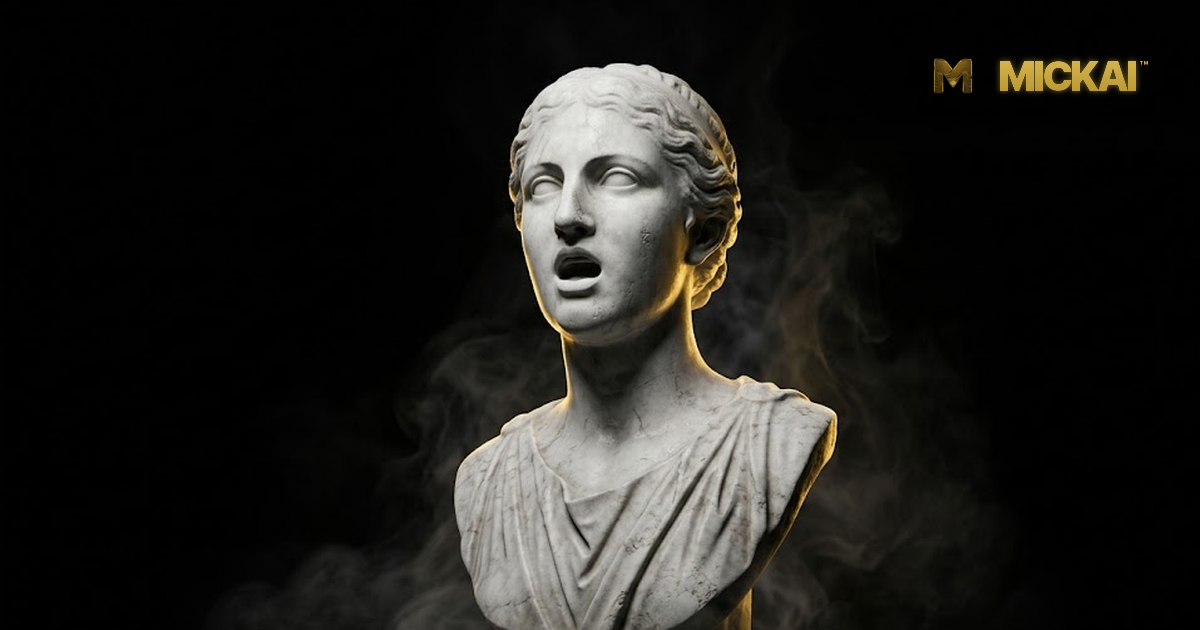
Ask a modern model why it reached a conclusion and it will answer fluently. The reasons sound careful. They cite factors, weigh them, arrive somewhere. The problem is that the explanation was written after the answer, by the same system that produced the answer, with no obligation to describe what actually happened inside the computation. This is explainability theatre. The performance of a rationale, staged for an audience that wants comfort more than truth.
The distinction matters because regulators, auditors and boards increasingly demand that automated decisions be explained. A model that can always produce a plausible-sounding justification satisfies the letter of that demand while emptying it of meaning. A fluent reason is not a true reason. The two only coincide by accident.
Post-hoc is not introspection
When a person explains a decision, we assume some imperfect link between the explanation and the cause. The link is weak in humans too, but at least the same mind held both. A language model has no such continuity. The forward pass that produced the answer leaves no transcript the model can later consult. So when you ask for a rationale, the model does what it does with every prompt. It generates the most probable continuation. The rationale is a fresh act of prediction, fitted to look like the cause, anchored to nothing.
Researchers have shown this directly. Change the wording of a question without changing its substance and the stated reasoning shifts to match the new framing, even when the answer stays put. Inject a misleading hint and the model adopts the answer the hint suggests, then constructs a rationale that never mentions the hint. The explanation tracks the prompt, not the computation. It is confabulation with good grammar.
Why fluent wrong reasons are worse than no reasons
A blank answer invites scrutiny. A confident rationale closes it down. Give an auditor a paragraph of well-formed reasoning and the natural response is to accept it, because checking it against the real computation is hard and the paragraph already reads like a check has been done. Explainability theatre does not just fail to inform. It actively suppresses the doubt that would have led someone to look harder.
The damage compounds in high-stakes settings. A loan refused, a claim denied, a flag raised against a person. In each case the affected party is owed a real account, and a fabricated one is not a lesser version of that account. It is a different thing wearing its clothes. The right question is never whether the model can produce an explanation. It always can. The question is whether anything binds that explanation to what occurred.
The thing that needs binding
If the spoken reason cannot be trusted, the honest move is to stop relying on it and instead record what the system actually did. Not a story about the decision, but the decision itself. The inputs that entered, the model and version that ran, the policy in force, the output that left, the human who reviewed or overrode it. A record of acts, captured at the moment they happen, before any narrative is composed.
This is where Mickai changes the terms. Mickai is a Sovereign Intelligence Operating System, fifty specialised AI brains (twenty-five domain and twenty-five operational) running on the operator's own hardware, fully offline-capable. Every consequential action it takes is written to the Open Audit Record. The OAR does not ask a model to explain itself. It seals what occurred and signs the seal with FIPS 204 ML-DSA-65, the published NIST post-quantum signature standard. The record cannot be edited later to fit a more flattering story, because any edit breaks the signature.
That inverts explainability theatre. Instead of trusting a rationale and hoping it matches reality, you hold a signed record of reality and can check any rationale against it. The burden moves off the auditor's faith and onto cryptography.
Permanence, without spending anything
A signed record still has to resist a determined operator who would rather the history said something else. Mickai answers that with Pantheon, its own sovereign Bitcoin-anchored Layer 1 (native token PAN, fixed supply of five billion). Pantheon anchors a hash commitment of the record to Bitcoin, which fixes the record in time against the most expensive history to rewrite on earth. It does not move Bitcoin and it is not a Bitcoin Layer 2. Anchoring is not spending. The commitment is a fingerprint, not a transfer, and once it is set the record's existence at that moment is no longer a matter of anyone's word.
What good explanation looks like once theatre is gone
Strip away the staged rationale and explanation becomes a humbler, sturdier thing. You can show exactly which inputs were present, which policy applied, which model version ran, what it returned and who signed off. You can replay the conditions. You can demonstrate that nothing was altered after the fact. None of that requires the model to narrate its own mind, a thing it cannot honestly do. It requires the system to keep an honest record, a thing it can be built to do, and Mickai is built to do.
The portfolio behind this approach is on the public register: 104 filed UK patent applications, 2,340 claims, owned by Mickai LTD, named inventor Micky Irons. They are cited here as evidence that the architecture is specified and defended, not as the argument itself. The argument is simpler. A reason you cannot verify is not a reason. A record you can verify is worth more than the most eloquent rationale a model ever wrote afterwards.
The plain test
Next time a system offers you its reasons, ask one question. Were these reasons recorded as the decision was made, or composed when I asked for them? If the second, you are watching a performance. The fix is not a better-spoken model. It is a record that was sealed before anyone needed a story, and that no one can quietly revise once they do.