The Test of True Sovereignty: Who Owns the Weights, the Update Channel, the Audit Trail and the Kill Switch
True sovereignty is a four-part test: you own the weights, the update channel, the audit trail and the kill switch.
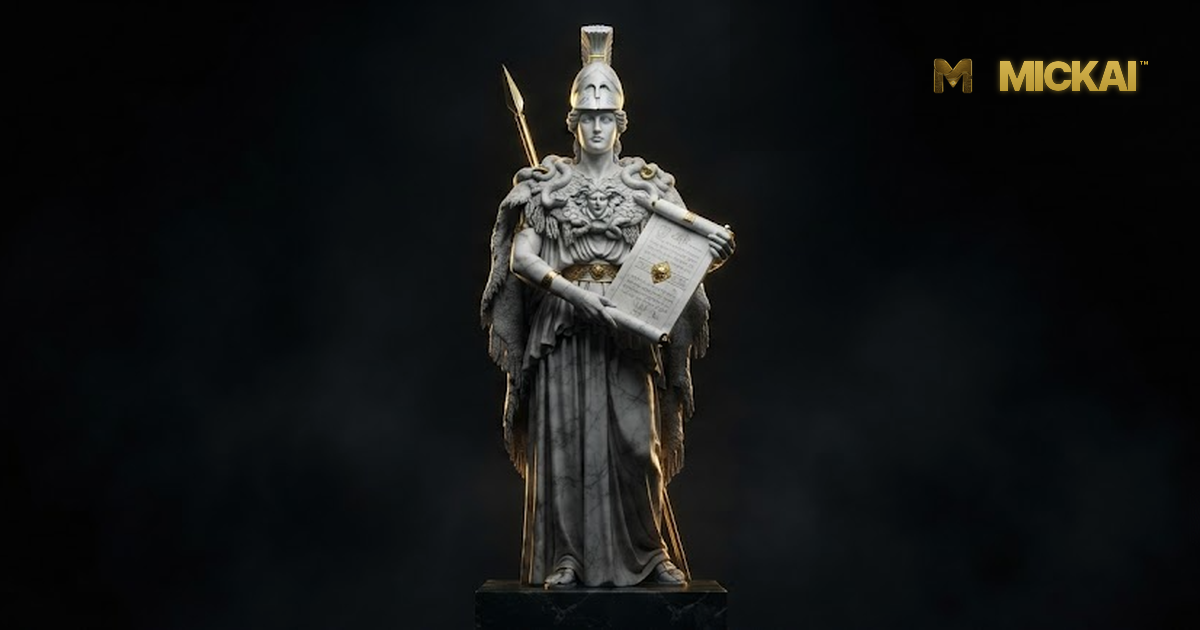
True sovereignty is a four-part test, not a marketing label. You hold it only when you own all four at once: the weights, so no vendor can change the model beneath you; the update channel, so nothing changes without your signature; the audit trail, so you can prove exactly what the system did; and the kill switch, so you can stop it on your own authority. Fail any one and you have delegated sovereignty, not held it. Sovereignty is control that survives the vendor withdrawing cooperation, and control that depends on someone else is not control.
This matters more in 2026 than a year ago. Regulated buyers in finance, defence, health and critical infrastructure now answer to overlapping regimes: DORA, in force since January 2025, NIS2, GDPR, ISO/IEC 42001 and the EU AI Act. The AI Act high-risk obligations under Annex III, once due on 2 August 2026, were deferred by the Digital Omnibus to 2 December 2027, with embedded Annex I high-risk obligations moving to 2 August 2028 and Article 50 transparency largely unchanged. We read that not as a reprieve but as a build window. Buyers who use it to move onto sovereign architecture will pass audit when the clock restarts. The rest will still be renting control from a vendor they cannot inspect.
What does owning the weights actually mean?
Owning the weights means the model parameters live on hardware you control and cannot be altered without your consent. When you call a public cloud service, the model can be retrained, quantised, safety-tuned or swapped between your Tuesday test and your Wednesday production run, and you will not be told. Your evidence base moves under you. Sovereign models close that gap: the weights are sealed on operator-owned hardware, versioned, and the version in production is the version you signed off. Mickai is a Sovereign Intelligence Operating System, a SIOS, that runs offline on your hardware precisely so this holds. If the vendor disappears, the model still runs.
Why does the update channel matter as much as the weights?
Owning today's weights is worthless if a remote party can push tomorrow's. The second test is the update channel: who decides when the model changes, and whether they can do it silently. A cloud service updates when the provider chooses. A sovereign system inverts that. Our architecture uses a zero-egress inbound perimeter, so the system never phones home and cannot receive an unsolicited update. Any change to weights, policy or configuration arrives as a signed package that an operator reviews and applies deliberately, and the act of applying it is itself recorded. No silent remote update is possible because there is no channel for one. You update on your schedule, or not at all, and either way you know.
What can an auditor actually check?
The third test is proof. An auditor should be able to reconstruct what the system did, when, and on whose authority, without trusting your word for it. That requires an audit trail that is complete and tamper-evident. In our design every action is cryptographically sealed into an append-only ledger. Identity is hardware-attested and bound to the chain, so each entry is tied to a specific machine and operator, not a shared token. The ledger is signed using post-quantum schemes standardised as FIPS 204 (ML-DSA), so entries stay verifiable and non-repudiable across the long retention windows DORA and NIS2 assume. An auditor checks the chain offline, not the vendor's dashboard.
“Sovereignty is control that survives the vendor withdrawing cooperation, and a system you cannot stop, inspect or freeze is one you do not own.”
Why is the kill switch the test most systems fail?
The fourth test is the one buyers most often overlook. Can you stop the system, immediately, on your own authority, without asking anyone. With a cloud service you cannot. You can stop sending requests, but you cannot compel the provider to halt processing, and under the US CLOUD Act data held by a US-linked provider can be subject to lawful access orders wherever it sits. A sovereign system that runs offline on your hardware gives you a real switch: you cut power or revoke the hardware-bound licence and it stops, provably, the stop recorded in the same sealed ledger. The kill switch turns the other three tests from paperwork into control.
How does an offline SIOS pass all four?
The four tests are one architecture. Weights sealed on your hardware pass the first. A zero-egress inbound perimeter with signed, operator-applied updates passes the second. A post-quantum signed, hardware-attested, append-only ledger passes the third. A local, licence-bound stop passes the fourth. Cross-model consensus sits across all of them: sovereign models check each other's output on your premises, so no single model becomes an unaccountable authority. None of this requires the internet. An offline SIOS passes for a structural reason: control that never leaves your building cannot be revoked from outside it.
How should a buyer apply the test?
Ask any vendor four questions and require documented answers, not assurances. One: if you vanished tomorrow, does our model keep running unchanged? Two: can you alter the model on our estate without our signature? Three: can we prove to a regulator what the system did, offline, without your systems? Four: can we stop it now, on our own authority. A sovereign system answers yes, no, yes, yes. Anything else is delegated control dressed as sovereignty. The test is blunt because sovereignty is binary: you either hold these four or you rent them.
Frequently asked questions
What is the difference between data sovereignty and true AI sovereignty?
Data sovereignty asks where your data is stored and which laws govern it. True AI sovereignty is broader: it asks whether you control the model itself, the weights, the update channel, the audit trail and the kill switch. You can hold data in-region and still lack AI sovereignty if the vendor can change the model, update it silently or refuse to stop it. Storage location is necessary, not sufficient.
Can a cloud AI service ever be truly sovereign?
Not on the four-part test. A public cloud service controls its own weights and update channel, gives you a vendor-defined view of activity rather than a ledger you can verify offline, and cannot be stopped by you alone. Regional hosting and private instances narrow the gap but do not close it, because the provider still holds the levers. Sovereignty requires the levers to be on your side of the perimeter.
Does the EU AI Act require a sovereign architecture?
It does not name sovereignty, but its high-risk obligations reward it. Record-keeping, human oversight, robustness and traceability are far easier to evidence when the weights are fixed, updates are signed and the audit trail is sealed and locally verifiable. The Digital Omnibus deferred the Annex III high-risk deadline to 2 December 2027, a window to adopt this architecture before the obligations bite, not a reason to wait.
What is a zero-egress inbound perimeter?
It is a network design where the system accepts controlled inbound requests but makes no outbound connections at all. Nothing phones home. No telemetry, no model call and no update leaves or enters uninvited. This makes silent remote updates impossible and lets the system run fully offline, so the update-channel and kill-switch tests hold by construction rather than by policy.
Why does post-quantum signing matter for an audit trail?
Regulated records must stay verifiable for years, and an audit trail signed with today's cryptography could be forged once quantum computers mature. Signing the ledger with post-quantum schemes standardised as FIPS 204 (ML-DSA) keeps each entry non-repudiable across those long retention windows. It means an auditor in 2035 can still trust that a 2026 entry was not altered, which is the whole point.